
Establishing profitable fast-charging sites
Solution

Snellaadlocaties voor vrachtwagens en zwaar verkeer

To enable the energy transition in the logistics sector, governments and investors are actively seeking suitable fast-charging locations for heavy-duty vehicles. These are significant investments that require a solid foundation. What is the charging demand in a given area? Which locations are best suited? And how can I realise a safe and user-friendly charging site that meets local planning and environmental requirements? As mobility experts with in-depth knowledge of logistics, electrification, policy and design, we’re here to support you every step of the way.

Energietransitie: steeds meer elektrisch zwaar verkeer

Van de totale uitstoot van broeikasgassen door binnenlands verkeer en vervoer wordt een derde veroorzaakt door vrachtvoertuigen (in 2023 gelijk aan 10,3 megaton CO₂). Om de energietransitie vorm te geven, zetten overheden en marktpartijen naast het verduurzamen van personenmobiliteit dan ook volop in op verduurzaming van (zwaar) logistiek verkeer. Op dit moment betekent dat vooral een overstap op elektrisch rijden. Er is wel een probleem: de huidige laadinfrastructuur is nog niet toereikend om het groeiend aantal elektrische vrachtwagens aan te kunnen. 

Switching to sustainable energysources 

In the European Union, heavy-duty vehicles are responsible for over a quarter of road transport emissions and account for more than 6% of the EU’s total greenhouse gas emissions. To reduce this impact, both governments and market players are investing in making not only passenger mobility but also transport more sustainable. According to the European Green Deal, the transport sector must reduce its emissions by 90% by 2050. For now, this primarily means a shift towards electric vehicles. However, there is a significant challenge: the current charging infrastructure is not yet sufficient to support the growing number of electric trucks on Europe’s roads.

A solid business case for fast-charging sites

Across Europe, investors are actively seeking ways to expand the fast-charging network. But developing a solid business case for fast-charging sites is easier said than done. Available space varies significantly between countries, and much of it is needed for nature, housing, or commercial activities. In addition, grid capacity is not always sufficient, and promising locations may already be in private hands.

As an investor in charging infrastructure, you want confidence that your investment will deliver returns in the long run. That requires clear insights, such as:

  • How many electric trucks operate in a given area, and what is their (fast) charging demand?
  • Which locations offer the highest potential, and how can you meet local government requirements?
  • Is there sufficient grid capacity available?
  • What is needed to design a safe and user-friendly charging hub?
  • And how do you efficiently coordinate with stakeholders such as municipalities, landowners, and grid operators?

To support you in answering these questions, Goudappel has developed a four-step approach for developing profitable fast-charging locations. Based on market potential, we assess charging needs, identify suitable sites, help design safe and user-friendly charging areas, and manage coordination with local authorities, landowners, and grid operators.

This ensures that your investment is grounded in evidence—and that the realisation process runs smoothly.
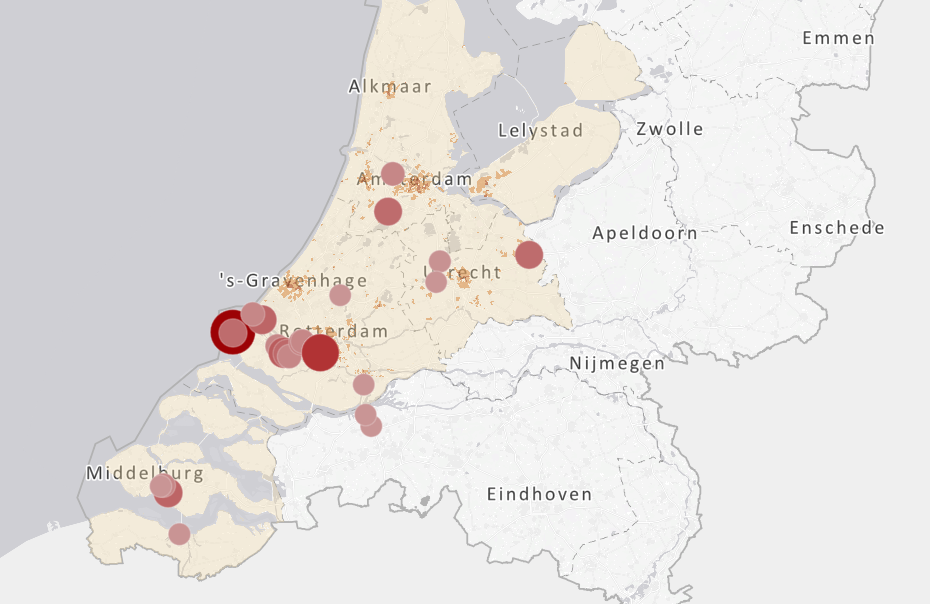
Voorbeeld dashboard geschikte locaties.png

An example of a dashboard showing charging demand for trucks in the Netherlands

Our 4-step approach for profitable fast-charging sites
  1. Market potential analysis

    Together with you, we define the key parameters for our analysis. Are you exclusively looking for fast-charging locations, or are you also exploring opportunities for other sustainable energy solutions—such as hydrogen or biofuels within Green Energy Hubs? Which potential locations have you already identified? And are you aiming to build a comprehensive, future-proof network?

    Based on these parameters, we assess the market potential across regions. What is the expected demand for charging or refuelling in a given area? We analyse this using GIS data and advanced traffic modelling:

    1. Selected link analysis – using transport model data and tooling, we identify the most critical freight corridors. How many trucks travel through the area? Where are the busiest routes? What share of those vehicles is electric or powered by alternative fuels? And what charging or refuelling demand does this generate?
    2. Comprehensive network planning – Looking to build a wide-reaching charging or refuelling network? We factor in long-haul transport by including vehicle origin and destination data as well as rest stop locations.


    Our analysis aligns with the European AFIR regulation, which defines minimum infrastructure requirements for charging and refuelling across the EU.


    We present the market potential per corridor through detailed mapping, interactive dashboards, or an online application—whichever suits your decision-making process best. We support you in interpreting the results:

    • Which locations offer the highest potential?
    • What external factors should be considered, such as planned spatial developments?
    • And how do local zoning plans or policies affect implementation?

    We also provide strategic advice on municipal policies and zoning regulations.

  2. Site-analysis

    Now that we have identified the most promising regions for fast-charging sites, we focus on selecting the most suitable locations. Using a detailed analysis with location-specific data (GEO-data) we search for the most suitable locations for developing a charging hub, such as motorway exits and business parks. 

    We consider the following factors:

    • Proximity to key transport routes and corridors: which major freight corridors are in the vicinity? How many electric freight vehicles pass through these routes and what distances do they cover? Would the location require significant detours?
    • Projected charging demand in the area: what transport flows are present in the region? What does this indicate for charging demand? The potential of high-speed charging site at a business park differs significantly form that of a standalone location or one at the edge of a city.
    • Proximity to existing (charging) infrastructure: what charging facilities are already available nearby? When and how are they utilised? This is essential to consider when aiming for a well-connected and comprehensive charging network.
    • Land ownership: who currently owns the potential site? Are there specific conditions or restrictions imposed by the landowner?
    • Planning regulations and zoning requirements: are there spatial planning constraints or (inter)national regulations to account for? For example, in Europe, the AFIR (Alternative Fuel Infrastructure Regulation) sets minimum requirements for the number of charging and refuelling stations in specific regions.
    • Grid connection distance: what infrastructure is required to connect to the electricity grid? Additional connections can be costly and may not always be feasible in the short term.
    • Grid capacity availability: is there sufficient grid capacity at both national and local levels? Are there opportunities to utilise unused contractual capacities?

    Based on this analysis, we present the most viable locations for developing a profitable fast-charging site.

  3. Design of a user-friendly location

    Once a location has been selected, we support you in optimally designing the fast-charging site. We translate charging and refuelling needs to an efficient spatial layout. Using simulation software, we visualise, test and optimise designs based on two key aspects:

    The site itself:

    • Optimal sizing: how many square meters are required to support the necessary power capacity? How do we integrate the charging infrastructure into the site?
    • Efficient and user-friendly design: how should charging points be positioned to ensure practical and seamless operation? Are inverters required, and how should security measures be implemented? How can we enhance user comfort and traffic safety? Is there sufficient space for heavy-duty vehicles to maneouvre?
    • Sustainable infrastructure: can we use future-proof materials while considering heat and water stress? 
       

    The surrounding area:

    • Connection to public roads: is there easy access to and from the site? What are the visibility lines like?
    • Municipal or national regulations: does the site comply with road safety regulations? Does it align with zoning plans, envionmental and spatial requirements?
  4. Project- or process coordination

    We also assist in the actual construction of fast-charging sites. Depending on your needs, we can take on the role of project manager or process coordinator. We support you with:

    • Assessing the impact of a new location on accessibility, traffic flow and road safety with our traffic models, often required for municipal permit approvals
    • Adjusting plans and design in response to evolving municipal regulations
    • Coordination with landowners and grid operators to ensure seamless project execution
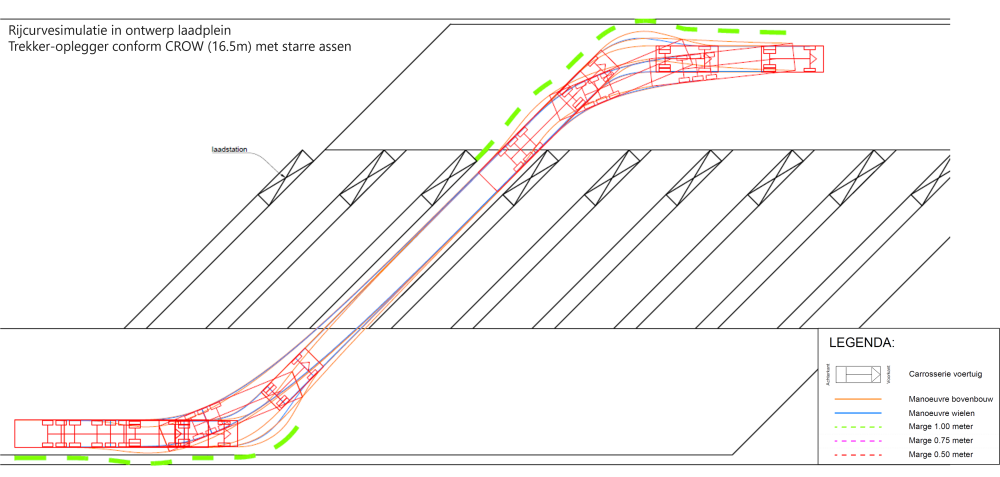
Rijcurvesimulatie

Example of a simulation used to assess whether there is sufficient driving and turning space for heavy traffic

Why Goudappel is your strategic partner for fast-charging site development

  • Smart, integrated solutions: we combine mobility expertise with insights from other domains. For example, thanks to our work in outdoor advertising research, we know how to calculate the commercial value of locations based on traffic flow and people movement.
  • Multidisciplinary expertise under one roof: from logistics to traffic safety and spatial design – our experts help you develop fast-charging sites that are technically sound, policy-compliant and seamlessly embedded in their surroundings.
  • A proven track record with both public and private partners: we work with 90% of Dutch municipalities and provinces, as well as national ministries, grid operators, developers and logistic companies. We understand what it takes to align stakeholders and deliver real results.
  • A strong international partner network: Goudappel is part of a strong international network of partners. Together we work on succesfull projects in different countries in which we combine experience and local knowledge. Where needed, we bring in additional specialist expertise, for example on safety and engineering.
  • In-house innovation: we invest over 5% of our annual revenue in innovation. This includes developing data tools and software to unlock, analyse and visualise reliable mobility data to support decision-making.

Ready to realise a profitable fast-charging site?

We’ll help you build a solid business case and ensure successful implementation.